A community information center.
The PPCM Kiosk is a small, physical, staffed information point in a Rwandan neighborhood — a place where residents can ask a question and leave with a trustworthy answer. It's the beating heart of the network, and the piece we are proudest of.
"A neighbor with a question shouldn't have to search the internet, or take a bus, or take anyone's word. The kiosk is the shortest, most dignified path to an accurate answer."— Easy and Possible Organization
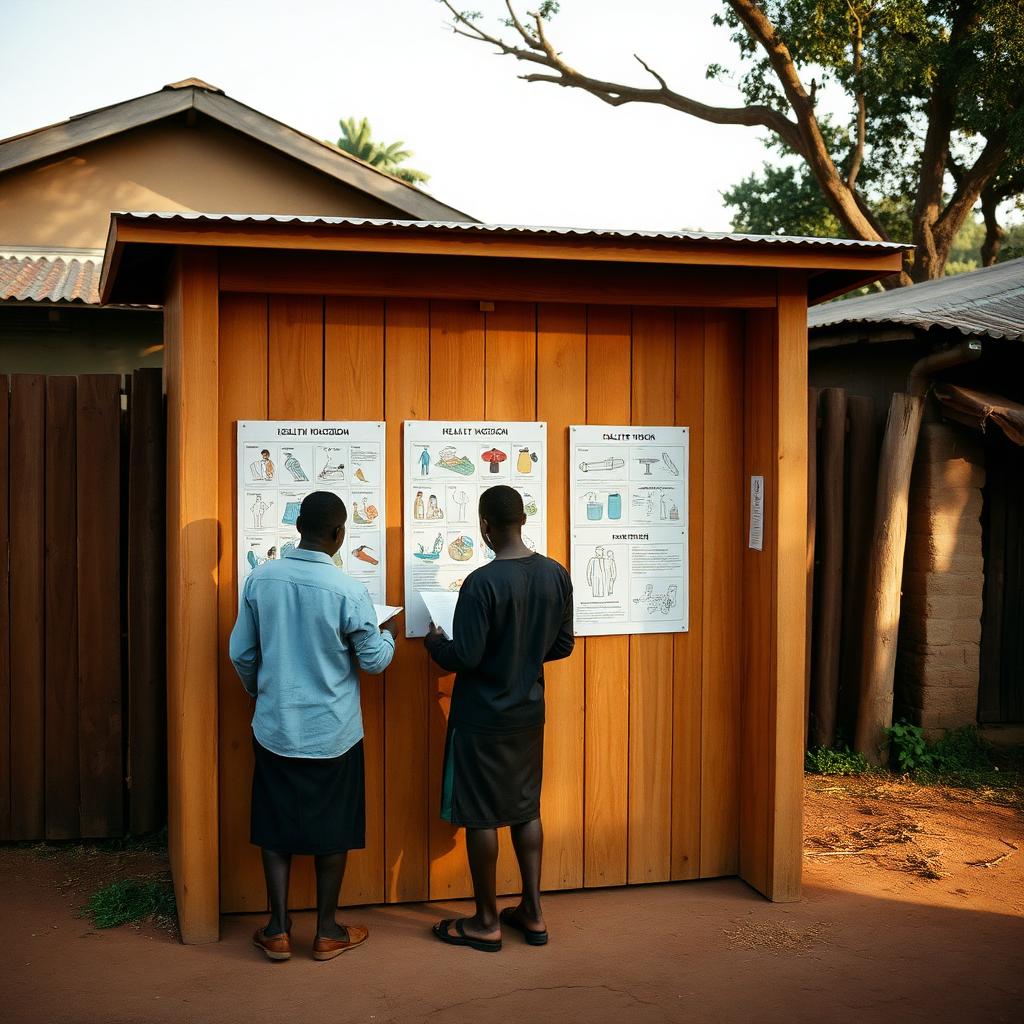
A small, weatherproof kiosk in a public location — near a market, a health post, a school or a church. Inside: a curated wall of printed materials, a whiteboard for weekly announcements, a small library of reference sheets, and — where available — a tablet connected to a curated offline knowledge base.
Each kiosk is operated by a trained community info agent, recruited locally and paid a stipend. Agents receive editorial and referral training and are supervised by an EPO regional editor.
Not a clinic. Not a legal office. Not a substitute for a professional. The kiosk gives a resident the right first answer — and a warm referral to the institution that can actually help.
What visitors leave with
Maternal care, vaccination, mental health, NCDs, sanitation, water safety, community health worker referrals.
Handwashing, food safety, cholera and outbreak preparedness, malaria prevention.
Access to legal aid, gender-based violence support, ID and civil registration, tenants' rights.
Child health, education support, adolescent SRH information, parenting guidance in Kinyarwanda.
Cooperatives, agricultural best practices, mobile-money literacy, small-business registration.
Umuganda, tax deadlines, national IDs, health insurance (Mutuelle), municipal services.
All materials are co-produced with the sponsoring partner (a ministry, an NGO, a UN agency) and reviewed by subject-matter experts before they are placed in a kiosk.
Why partners choose the kiosk
Depth over reach
A kiosk visitor spends 3–8 minutes with your information — far beyond what any radio spot or billboard can hold.
Trusted messenger
A local agent answering in Kinyarwanda is more persuasive than a national voice on a screen — especially for sensitive topics.
Real conversion
Kiosks issue referrals to services, book appointments, and record where a visitor came from — measurable outcomes, not just impressions.